
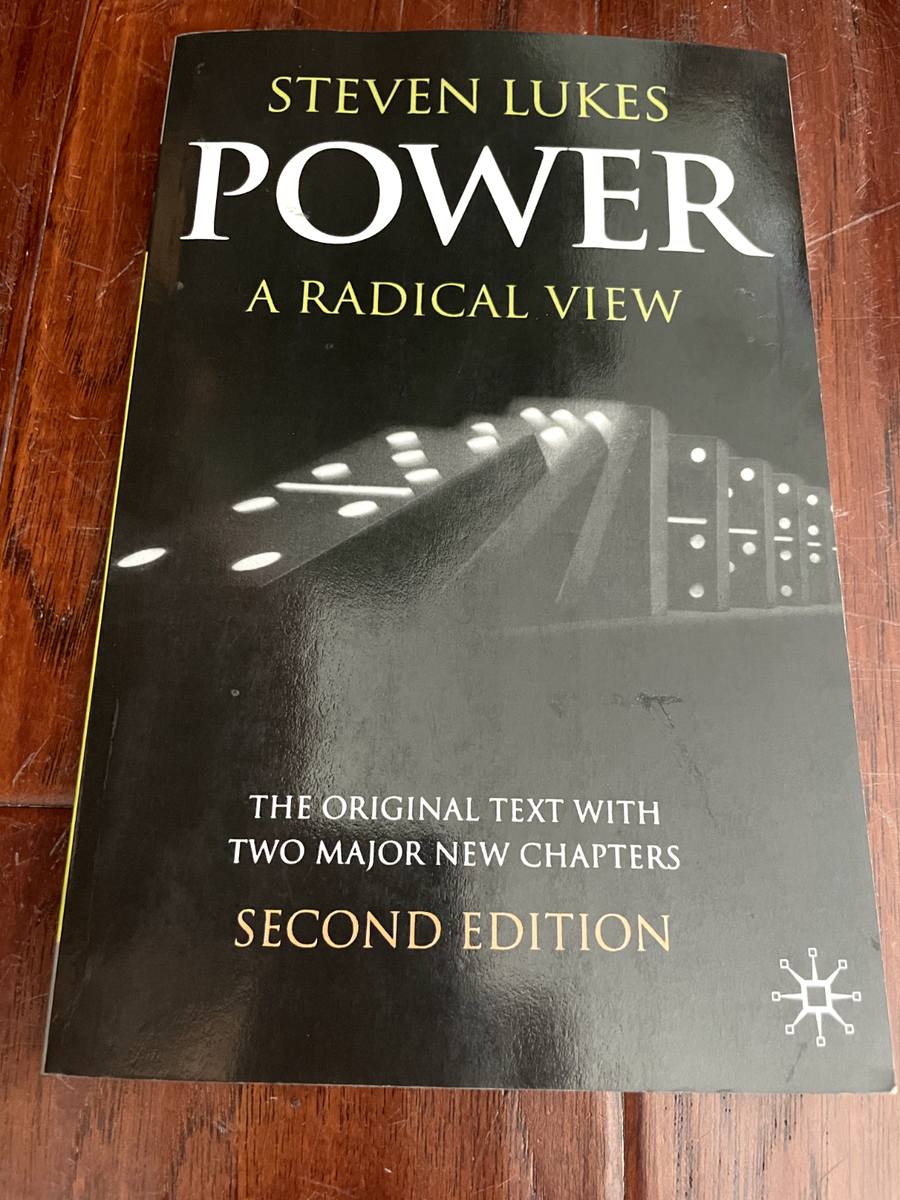
There are some books and thinkers that stay with you throughout your career.
For me, one of those is Steven Lukes.
His work on the three dimensions of power fundamentally changed the way I think about people, systems and society. Although written decades ago, it remains remarkably relevant to how we understand exploited children who are too often criminalised instead of protected.
Lukes argued that power operates in three distinct ways.
The first is the most visible. It is the power we can see. It determines who wins an argument, whose voice is heard and who makes the final decision.
The second is quieter.
It is the power to decide which conversations are allowed to happen in the first place. If an issue never reaches the agenda, it never has the opportunity to be understood or addressed.
But it is Lukes' third dimension of power that I have found most thought-provoking.
This is the power to shape how people think.
It is the ability to influence beliefs, assumptions and expectations so deeply that people begin to accept situations that should never be accepted.
It is, perhaps, the most powerful form of power because it often goes unnoticed.
As I reflect on today's safeguarding landscape, I cannot help wondering whether we see all three dimensions at work.
When exploited children are criminalised rather than protected, the first dimension is obvious. Decisions are made. Charges are brought. Interventions focus on the child's behaviour rather than the exploitation they have experienced.
The second dimension is more subtle.
Which questions are we asking?
Are we asking why a child was carrying drugs, or are we asking who was controlling them?
Are we asking why they went missing, or who benefited from their absence?
Are we asking why they offended, or why they were left so vulnerable to exploitation in the first place?
The questions we choose to ask shape the answers we are able to find.
Then there is the third dimension.
What happens when society begins to accept the idea that some exploited children are simply offenders?
What happens when children themselves begin to believe the labels placed upon them?
What happens when professionals stop seeing exploitation because criminalisation has become the dominant narrative?
These are not simply questions about individual practice.
They are questions about power.
At ECO, we believe language matters because language shapes thinking. Thinking shapes decisions. Decisions shape children's lives.
If we want to end the injustice of criminalising exploited children, we must be willing to question not only the decisions we make, but also the assumptions that underpin them.
Perhaps that is the greatest lesson Steven Lukes offers us.
Power is not only exercised through the decisions we can see.
Sometimes it is exercised through the conversations we never have and the beliefs we no longer think to question.
If we are serious about creating a fairer safeguarding system, then perhaps the first question we should ask ourselves is not, "Who has the power?"
It is, "How is power shaping the way we see the children in front of us?"
Written by: Sherry Peck