
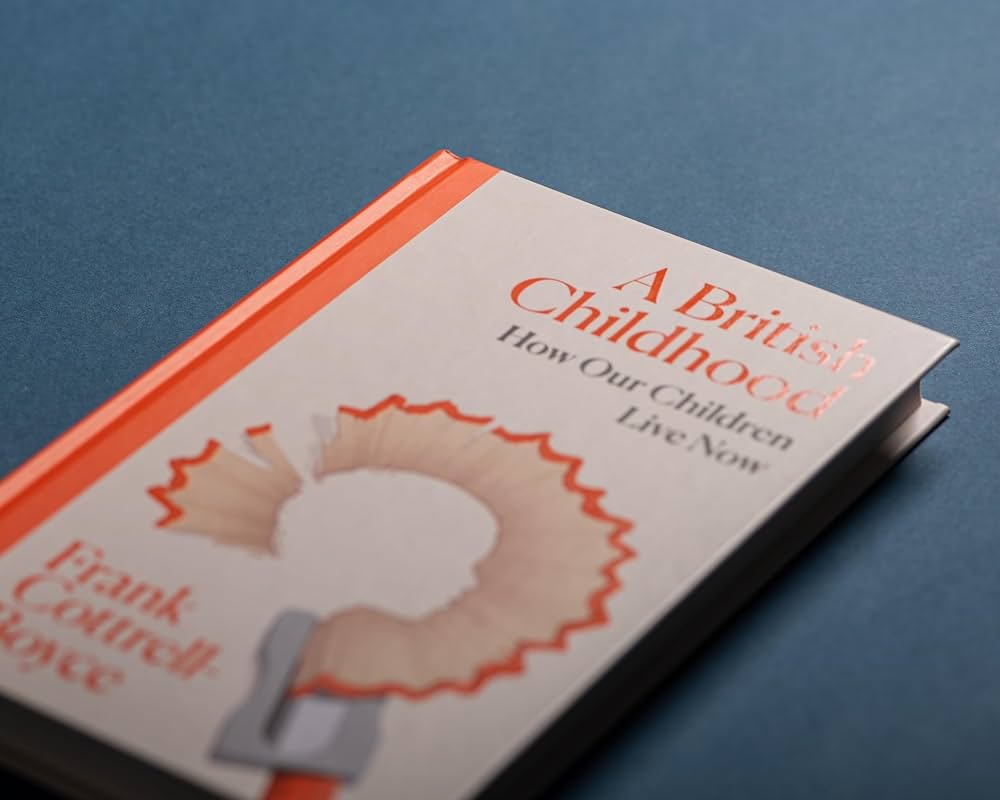
When Childhood Becomes Invisible
Reflecting on Frank Cottrell-Boyce's A British Childhood, ECO explores how exploited children become invisible — recognised only through their offences, not their exploitation. Custody shapes self-perception: children internalise guilt when treated as criminals. ECO argues for a deeper conversation about childhood itself, and ensuring exploited children are seen as children first.
Young People Aren’t Snowflakes. We Need to Look at the World We Have Built Around Them
This piece responds to Professor Peter Fonagy's rejection of the "snowflake generation" narrative, arguing rising youth mental distress reflects environment, not fragility. ECO contends behaviour is communication — distress often looks like disengagement or defiance. True safeguarding means examining children's surrounding conditions, not just correcting behaviour or individualising blame.

Do We Need a Paradigm Shift?
Drawing on Thomas Kuhn's concept of paradigm shifts, this post argues that criminalising exploited children isn't inevitable — it's an outdated response, like past acceptance of child labour or segregation. Real change starts when enough people question the assumption that punishment, not protection, is the right answer for these children.

Power Is Not Always Loud
Power Is Not Always Loud
There are some books and thinkers that stay with you throughout your career.
For me, one of those is Steven Lukes.
His work on the three dimensions of power fundamentally changed the way I think about people, systems and society. Although written decades ago, it remains remarkably relevant to how we understand exploited children who are too often criminalised instead of protected.
Lukes argued that power operates in three distinct ways.
The first is the most visible. It is the power we can see. It determines who wins an argument, whose voice is heard and who makes the final decision.
The second is quieter.
It is the power to decide which conversations are allowed to happen in the first place. If an issue never reaches the agenda, it never has the opportunity to be understood or addressed.
But it is Lukes' third dimension of power that I have found most thought-provoking.
This is the power to shape how people think.
It is the ability to influence beliefs, assumptions and expectations so deeply that people begin to accept situations that should never be accepted.
It is, perhaps, the most powerful form of power because it often goes unnoticed.
As I reflect on today's safeguarding landscape, I cannot help wondering whether we see all three dimensions at work.
When exploited children are criminalised rather than protected, the first dimension is obvious. Decisions are made. Charges are brought. Interventions focus on the child's behaviour rather than the exploitation they have experienced.
The second dimension is more subtle.
Which questions are we asking?
Are we asking why a child was carrying drugs, or are we asking who was controlling them?
Are we asking why they went missing, or who benefited from their absence?
Are we asking why they offended, or why they were left so vulnerable to exploitation in the first place?
The questions we choose to ask shape the answers we are able to find.
Then there is the third dimension.
What happens when society begins to accept the idea that some exploited children are simply offenders?
What happens when children themselves begin to believe the labels placed upon them?
What happens when professionals stop seeing exploitation because criminalisation has become the dominant narrative?
These are not simply questions about individual practice.
They are questions about power.
At ECO, we believe language matters because language shapes thinking. Thinking shapes decisions. Decisions shape children's lives.
If we want to end the injustice of criminalising exploited children, we must be willing to question not only the decisions we make, but also the assumptions that underpin them.
Perhaps that is the greatest lesson Steven Lukes offers us.
Power is not only exercised through the decisions we can see.
Sometimes it is exercised through the conversations we never have and the beliefs we no longer think to question.
If we are serious about creating a fairer safeguarding system, then perhaps the first question we should ask ourselves is not, "Who has the power?"
It is, "How is power shaping the way we see the children in front of us?"

Hard to Reach… or Deliberately Erased?
Drawing on Warda Farah's book White System, Black Therapist, this post challenges a familiar phrase: "hard to reach." Farah argues it's often a gentler way of saying "erased." Exploited children are frequently overlooked until they're criminalised — seen as offenders before they're recognised as victims. Referencing Jahnine Davis's work on conditional safeguarding, the post argues protection itself is unevenly given, and that our language decides who carries the blame.

A Landmark Decision – Now Apply the Same Lens to Child Criminal Exploitation
The Criminal Cases Review Commission has quashed the convictions of a woman who was groomed and sexually exploited as a child, finding that state failures to protect her undermined her ability to participate fairly in her own criminal trial. This piece from Ending Coercive Offending welcomes the decision as a landmark moment — and asks the harder question that follows: if exploitation changes how we understand a child's actions in cases of sexual abuse, why should the same logic not apply to children coerced into criminal exploitation — drug running, weapons, robbery, cannabis cultivation? The piece argues for revisiting historic convictions of exploited children, not just improving safeguarding going forward, and calls for justice to be examined through the lens of coercion rather than offending.

Is Possibility Available to Every Child?
Inspired by Benjamin Zander's story of a child embracing "possibility," this piece asks whether all children truly have that chance. Exploited, criminalised children often face shrinking options and disbelief, causing epistemic injustice. Systems must ask "what happened to this child?" not just "what did they do?" to restore possibility.

Welcoming a Long Overdue Step Towards a Child-Centred Justice System
Raising the criminal responsibility age to 14 recognises that many children who offend are themselves victims of trauma, coercion and inequality. Early criminalisation harms development and increases future offending. A welfare‑led, child‑centred approach is needed to protect children, reduce harm and shift systems toward safety, recovery and hope.

Should Children Be Held Accountable? Rethinking Responsibility, Harm and Justice
We examine how current safeguarding and justice systems fail exploited and criminalised children. It highlights structural harm, unnecessary custody, the impact of violence, and the need for trusted adults, earlier intervention, and reform. Posts challenge criminalisation and advocate for child‑centred, trauma‑aware approaches that prioritise safety and belonging.

When Safety Systems Create More Harm: What the IMB Annual Report Tells Us About Children in Custody
We analyse the Independent Monitoring Boards (IMB) Annual Report, highlighting how current safety systems within youth custody often aggravate trauma rather than protect. It explores the systemic failures leading to increased harm for vulnerable children and calls for urgent reform to foster genuine rehabilitation and safety.

New Resources Added – Understanding the NRM (For Children)
This blog post introduces new, accessible resources designed to help children understand the National Referral Mechanism (NRM)—the framework used to identify and support victims of modern slavery. It focuses on breaking down complex legal processes to empower young people and support professionals in preventing and ending coercive offending.

Violence Changes Children — And Then We Punish Them for It
Chronic violence fundamentally reshapes a child’s development. Current systems often misinterpret survival adaptations as criminal intent, prioritizing punishment over protection. To disrupt this, leaders must reframe these responses as safeguarding triggers, addressing the structural inequalities—like poverty and exclusion—that drive exploitation rather than individual moral failure.

Reading Gary Slutkin on Holiday — And Thinking About Children We Continue to Fail
Reflecting on Gary Slutkin’s The End of Violence, ECO’s founder Sherry Peck explores how reframing violence as a product of environmental exposure, trauma, and social conditions challenges current statutory responses to child exploitation. Slutkin’s model suggests that when environments shape what becomes necessary for survival, default criminal justice responses fall short.
Too often, interventions for coerced and exploited children occur through policing, exclusion, or prosecution rather than proactive safeguarding. This highlights a critical systemic failure: responding to children’s survival strategies as criminal intent rather than recognizing the severe impact of coercion. To disrupt this cycle, systems must pivot toward relationship-based interruption and credible messengers, prioritizing rights-based protection over punishment.

When Is It Not Kidnapping? Rethinking How We See Criminally Exploited Children
Exploited children are often prosecuted as offenders despite being controlled through surveillance, debt, and violence—conditions akin to kidnapping. By prioritising criminal justice over safeguarding, the system punishes survival rather than addressing coercion. We must shift the question from "What offence was committed?" to "What has happened to this child?"

What Boards and Funders Must Understand About Exploitation and Coercive Offending
Exploitation and coercive offending are lived realities often masked by "successful" metrics and dashboards. Boards and funders must move beyond organisational compliance to prioritise tangible child safety. By challenging adultification and shifting focus from measurable activity to genuine protection, leaders can ensure systems interrupt harm rather than just recording it.

Why adults that can be trusted are so important to children
ECO argues that safeguarding requires epistemic trust—the belief that adults are reliable and helpful. For exploited children, systemic failures like criminalisation destroy this trust, making disengagement a rational act of self-protection. Safety is built through consistent, attuned relationships and trustworthy institutional actions, not just procedures or professional control.

Are we Safeguarding exploited children?
Safeguarding often fails children by becoming a "tick-box" exercise that prioritises institutional compliance over real protection. It highlights how "adultification"—viewing vulnerable children as responsible adults—replaces empathy with management. True safeguarding must challenge these narratives, prioritise lived experience, and ensure children actually feel safe and believed.

The children we are failing twice: neurodiversity, exploitation, and criminalisation
ECO highlights that neurodivergent children are disproportionately targeted for exploitation and criminalized by systems that misinterpret their differences as defiance. The current design fails to protect these vulnerable youths, prioritizing punishment over safeguarding. ECO advocates for neuro-informed responses and systemic changes to uphold children's rights and prevent further harm.

Working Together 2026: Stronger Safeguarding — But Still Silent on Criminalisation
The Working Together 2026 guidance improves multi-agency coordination and early intervention but fails to address a critical systemic blind spot: the ongoing criminalisation of exploited children. Despite stronger safeguarding language, it lacks the structural protections and explicit mandates required to prioritise children's rights over prosecution when coercion and exploitation are present.

Social Entrapment, Structural Harm & Children: Why Justice Reform Must Start Earlier
Instead of focusing on individual "choice," the concept of social entrapment highlights how structural harm, poverty, and systemic failures constrain a child's options. Behaviours often labelled as offending are frequently survival strategies in response to layered pressures and exploitation. ECO advocates for a justice system that moves beyond blame, asking not just "what did the child do?" but "what happened to them?" to ensure responses prioritise welfare, rights, and long-term wellbeing.